Millions of people make new years resolutions, and the majority never even get past day one at making them stick. Unfortunately, I hate to admit, but I am often times one of the these people. My misfortune at sticking to all my goals is likely due to the fact that I lean toward the unrealistic expectation that I can achieve "life nirvana" in ALL areas, in less than a week. Right. And I will soon be Mother Teresa too.
Well, if there is to be any success, we must first and foremost make up our minds what it is we REALLY want to accomplish. Resolution does, after all, mean to be resolute, firm, determined, and have unshakeable faith. Can we really believe in OURSELVES with unshakeable faith? What is it we are resolving to change and WHY. For that matter, what is your ultimate WHY? What drive you in life more than any other thing? You may find it challenging to believe whole heartedly at first that you CAN achieve that which you desire, but we can enlist those who do believe in us or can help us in this way. Two are always better than one.
Ultimately, though, we are human. We must see that we cannot accomplish everything in our own strength. Humility is key here. Albeit we try pretty hard and have fairly good success in life most of the time. So, what is your measuring stick? How will you know if you have succeeded? Make a concrete list of ideas about what you are trying to achieve, how you will know you have achieved it, and by when you will achieve it. This should help you weed out the unimportant stuff. Who has time to do it all?!
Lastly give yourself a little wiggle room. Life is much too short to always beat yourself up for not making the world's best charts. It is in life's little successes and failures that we often reap the greatest reward anyway. We have all lost a little bit of the child in us as we hurry from deadline to duty. What have you lost in the sense of your time, character, or goals that you want to restore?
Take steps forward with unshakeable faith to tell a friend, celebrate life everyday, and then make each stumble a part of your dance. What may end up being restored, is exactly that unshakeable faith in you you were looking for in the first place.
Monday, December 29, 2008


Thursday, December 11, 2008
Creative Calorie-Burn Exercises
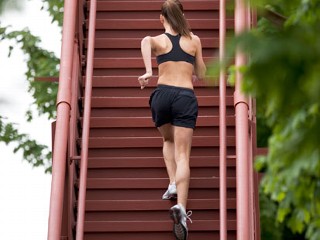
Everyone knows that time is short and exercise is hard. So, here are some suggestions to up the daily burn and some suggestions for quick calorie blasting exercises:
Increasing your daily calorie expenditure basically means that you are simply adding in more movement throughout your day that causes your body to require more calories for that day to sustain itself. Some easy ways to accomplish this are pretty obvious, but not always at the forefront of our conscious mind. This is my reminder...
- Park at the farthest spot from the store door or at the opposite end of the mall from the store you are trying to reach.
- Take the stairs. Even in your own home. Rather than piling things at the bottom and taking big load up at once, choose to take the items up one at a time as you gather them.
- Fidget. It has been researched and proven by the Mayo Clinic that those who fidget (picture a knee bouncing like crazy or the gal who can't stop twirling her hair) burn 70 to 100 calories more per hour when they stand compared to laid-back people who stand still.
- Eat regularly throughout the day. Your body conserves energy by lowering your metabolism when it has not eaten for quite some time. So skipping breakfast, skipping meals, and going on starvation diets are counter-productive to weight loss. And the ultimate tendency is to eventually give in and binge.
- Do a short circuit of 10 push-ups, 10 squats, and 10 lunges on each leg. Repeat as many times as you can in the amount of time you have.
- Jump rope. It's not just for kids!
Monday, November 17, 2008
Holiday Challenge!!

There are 5 weeks between Thanksgiving and New Years. Resolve to THRIVE in your wellness plan during the holiday season this year. All my clients will be asked to accept a Holiday Challenge this year to help them stick to their goals. Check out my NEW WEBSITE and click on "What's New" for more information! (A special thanks to VocoCreative for making the website a reality)
Happy competing!
Friday, November 7, 2008
Bring on the Holiday's...no seconds, please!

One of the things I hate most about "The Holidays" is that it is the hardest time of year to get and stay motivated to workout and eat healthy. But the worst part about it is that it is just assumed that it will be hard! I am CHALLENGING ALL OF YOU this year between Thanksgiving and January 1st, 2009 to determine with others on this post that rather than just going with the flow and letting ourselves go...we will prevail!
Let's decide how we will live our lives rather than letting our lives decide FOR us! What will it be for you? Perhaps a commitment to drinking half your body weight in ounces every day, or getting a minimum of three 60minute workouts in every week? Maybe you want to give up the processed carbs every day except the BIG holi-DAYs. How about keeping a consistent log of all your workouts and eating for 34days so you can keep track of all that you accomplish? Wanna start a yoga class...its a great way to reduce stress:)!
I challenge you ALL to commit to what you want most out of the holidays...living a life you can feel proud of and that brings you joy. Not for the sake of how you look, but to be able to participate in life so that every year gets better and better...even if buying gifts and stuffing turkeys doesn't!
Wednesday, August 27, 2008
Why can't I lose weight- Part 3...Food
 I have a poster hanging in my room from a local yoga store, and one of my favorite quotes on it is, "Coke, Pepsi and all other pops will be known as the cigarettes of the future. Colas are NOT a substitute for water. They are just another cheap drug made to look great by advertising." Likewise, (and especially now that I have seen the documentary Super Size Me) I am completely convinced that many of us are very unaware of what we actually put in our mouths on a daily basis.
 The United States alone sprays 2 billion pounds of pesticides a year on crops. Many foods we eat are so mass produced that we don't know what is on the ingredient list let alone how to pronounce them! The majority of our food is so pasteurized and sanitized that it destroys many of the vitamins, essential fatty acids, and other nutrients in our foods. What all this means is that we end up eating very low-quality foods that are full of calories, but low in actual nutrient value. This ends up tricking our body into thinking that we still need more calories to get the essential components to repair and build new cells and tissues to maintain optimal function in our bodies.
The ideal diet is in fact a "non-diet". It includes all of the following suggestions to keep you eating whole foods that will keep your energy up and your body revving like a well-oiled machine:
1) Eat breakfast. Be sure to kick start your metabolism with a good fiber, protein, and a little healthy fat. A great breakfast includes a hard-boiled egg and a 1/2 cup oatmeal with raisins with a smidge of honey and cinnamon for flavor.
2) Eat a mid-morning and mid-afternoon snack: One of the biggest pit-falls is the fact that people choose snacks that actually make their blood sugar go crazy. Choose low glycemic foods.
3) Keep track of what you eat: Writing down your food for the day is always a good check to see what you are actually eating, what triggers over-eating, and may give you some insight into ways that you could shift your eating habits to make improved choices. I love using www.fitday.com to log in my food so I can see exactly where my diet might be suffering.
4) DRINK WATER: This can not be stated enough. A significant fraction of the human body is water. Lean muscle tissue contains about 75% water. Blood contains 95% water, body fat contains 14% water and bone has 22% water. When we don't drink water, the whole body suffers! You should try to drink a minimum of 100-120 ounces of water/day.
5) Eat organic when possible. You will have higher nutrient density foods, less chemicals and additives, in addition to simultaneously helping the environment!
6) Avoid simple sugars, refined salt, pre-packaged foods, caffeine, and trans-fatty acids.
7) DO EAT foods high in Omega 3's, raw fruits and veggies, whole or sprouted grains, and lean meats.
8) Supplement. See more in the next blog! for snack in 100-200 calorie portion sizes.
Above all, take slow steps to change one habit at a time. It is amazing how you body will begin to crave what it really needs!
Monday, July 14, 2008
Why can't I lose weight?: Part 2

In Part 2 we will discuss stress and its effects on our ability to lose or manage our weight. It is no thing new to hear that Stress is a problem in our society. But WHY? We are the most wealthy country with the some of the best medical care available, the most readily available food sources, and an the most information available than ever before at our fingertips through the internet. Why can't we get a handle on this STRESS, and why does it have such an impact on our ability to manage our waist-lines?
It is my opinion that Stress is the NUMBER ONE killer of our bodies. Stress has many effects throughout the body. I will name a sampling of them here as they relate to metabolism, and offer a few solutions for each.
1) Energy: Let's face it, we are tapped out. Many of us long for a hot bath and a good book just to get an escape. We don't need much, just a little nap every now and then. Stress increases our bodies Cortisol, which basically decreases our ability to come under the influence of Serotonin...that lovely hormone that helps us relax, have a joyful and balanced mood, and sleep well. To increase energy, try going to bed by 10 pm and rising by 6 am. Sticking to a regular pattern of sleep will help you sleep more restfully, and recover better through the night as our brain and bodily cells rebuild and restore.
2) Digestion: When we are stressed, we often times revert to shallow chest breathing and our eating goes "wonky". Our satiety, hormones, and GI tract function will be much more optimal when we stick to foods that are low in saturated fats, high in lean protein, and that include lots of fruits and veggies. Take the time to plan your meals ahead of time so that you don't have to stress at 1:30 when lunch and hunger are all you can think about. If that suggestion stresses you out, at least plan ahead where you can access good-for-you foods at the local cafe. I also recommend good portion control, particularly at lunch and dinner when we are most likely to eat past fullness due to hunger. Eating 5-6 small meals/day helps, but we should also be willing to really pay attention to when we are hungry (growl) and when we are comfortably full (this is way before you have to undo the top button of your pants to feel comfy.)
3) Chronic disease: Chronic Stress when unaddressed can lead to elevated blood sugar and blood pressure, loss of muscle and bone tissue, and a suppressed immune-system. Now I don't know about you, but it there was one thing I could start to regulate that would make all this symptoms improve, I would work on that! I love the idea of my hormones working for me in situations where I might need to "fight or flight" quickly, but we tend to stay in this fight or flight stage all the time. Our bodies get confused and start breaking down muscle for energy while dumping increased loads of blood sugar into our system to be ready for the attack. If this sounds like you, then find a friend with whom you can download your anxieties. Talking and getting things off your chest might be just the ticket. Better yet, find a life coach who can help you get your life in balance. If nothing else, visit your local library for a yoga video or sample some Tai Chi exercises for fun.
In the end, we all have the same 24hours in a day...let's choose to make the most of them by choosing to take moments to reflect and relax!
Tuesday, June 24, 2008
Why can't I lose weight?: Part 1

As many of you who have tried know, losing weight is not an easy task. For one, our bodies are hard-wired to keep us from starving. A little trick from mother nature from back in the day when we actually had to hunt and harvest for our next meal. Today, it's as easy as driving through the corner coffee shop and we have a sugar and caffeine jolt that could feed and jump start a small village. I often wonder how I ever got through my teens without my beloved coffee, so don't get me wrong, the advances we have made are wonderful. I am thankful for the ability to spend my time and money doing much more fun and enlightening things than "working" for my food, but why can't we make it "work" for us? The funny thing is, there is more information than ever to help us navigate this mysterious topic of healthy eating and weight loss. In the first of this 5 part series, I will address the topic I have the most experience and love for...exercise.
There are lots of variables that factor into how our bodies will shift into a fat burning mode, but the first and foremost thing you should know, is that the best, fastest, and easiest way to maintain weight loss, is to combine a modification of you diet, and to increase your exercise on a regular basis. It is a well known fact in the diet world that it takes an expenditure of 3500 to lose one pound. This expenditure can come in three forms; decreasing the total amount of calories we eat, increasing the amount of calories we burn during exercise, or increasing the amount of calories we burn at rest. The benefits of exercise are vast, but here is a top 5 list:
1) Increases energy and immunity
2) Increases bone density
3) Improves cardiovascular health
4) Burns calories and increases our basal metabolic rate
5) Relieves stress
To meet the above criteria of a 3500 calorie expenditure, you would have to use an extra 500 calories per day for a 1 pound weight loss in a week. You can use this great website at NutritionData to calculate what that would look like for you. But even better, is to combine a little exercise with a little better moderation with food. That means 4-5 days of moderate exercise and a couple hundred less calories a day (choosing skim milk in that coffee would make the difference).
Ah, but the time...how can you fit in this 4-5 days of moderate activity. Well, if you can, try to start with just 2-3 days of a 30min. walk where you can get in some hills or stick in a light jog for a couple minutes every so often. The idea is to increase the intensity when you are going for a shorter period of time. In the other two days, just try to get in 3-4, 5-10minute bursts of activity like walking from the farthest spot in the parking lot or taking the stairs. To know how hard you should be working, see my previous blog on breathing.
Check in next time for more information on losing weight, Part 2...What should I eat?
Sunday, June 8, 2008
Stress and breathing
The topic of relaxation and dealing with stress has come up frequently with many of my friends and clients as of late. There is a tie to it all that can be be realized just by getting our breathing back to its intended state. I have listed below some interesting info about stress, breathing, and how you can implement a quick and easier way to tap into the healing power of BREATH today.
BREATH:
Few people would argue that breathing is one of the most important aspects of human life! However, it is likely that many of your clients do not breathe properly. The two most common problems are a rapid respiratory rate and overuse of the chest during the inhalation cycle. In the later of these two there is inadequate downward travel of the diaphragm, inadequate expansion of the abdominal wall and inadequate expansion of the rib cage resulting in an alteration of blood-gas mixtures which favors the action of calcium and can result in muscle cramping.
Poor respiratory performance is usually related to several factors, such as:
· Poor posture
· Emotional stress
· Fear
· Bad diet
· Poor examples of how to breathe from parents
Because many people are exposed to at least one of the above factors, the inability to breathe properly is a common clinical finding. I have personally found many people who have breathing dysfunctions in the presence of pain and dysfunction in the head, neck, jaw, shoulder and arm regions. There may be an additional visceral dysfunction related to poor breathing habits as well. The diaphragm is a major player in the circulation of lymph and blood through your internal organs, in addition to its role in keeping the organs mobile. When the respiratory apparatus is dysfunctional, the chance of developing visceral ptosis is elevated as is the chances of becoming constipated. This is just one way incorrect breathing will diminish the body’s ability to eliminate toxins.
-Paul Chek
STRESS:
Chest breathing can be the result of stress. In order to better understand stress, we must first understand stress’s connection to the sympathetic nervous system.
The sympathetic side of the autonomic nervous system has a lot to do with our “fight or flight” response. When you encounter a stressful situation you evoke a sympathetic response. Imagine that you are at a gas station paying at the counter and in comes a man with a ski mask waving around a gun demanding money. You would surely experience a sympathetic response. You would probably have an overwhelming urge to do one of two things. One, sprint out the door, run home and change your shorts. Or two, kick some serious butt!
This is an example of a very stressful situation evoking a sympathetic response. Very few of us encounter stresses of this magnitude on a regular basis, but we do experience more subtle stresses frequently, which still warrant a sympathetic response. Examples include worrying about bills, driving in traffic, feeling pressed for time or encountering a difficult business or personal relationship. These types of stresses can stay with us day in and day out, and even carry over to our sleep.
One of the first things that happens in a stressful situation is our respiration increases, and generally we breathe more from the chest. Returning to our extreme example from above, ask yourself if you would experience a faster respiration rate. You most certainly would. Going back to the smaller everyday stresses, when you are under a constant “fight or flight” response you do not experience any time between stressful situations to recover from them. This is all too common today. People over-stress themselves and do not do enough to relieve the stresses that they experience. So they live in a constant state of increased respiration relative to what is optimal for good health.
There is sufficient evidence out there to conclude that the human body is not meant to be under a constant “fight or flight” response. What really seems to be likely is that our sympathetic nervous system is meant to function for survival reasons and then be less active when the body is not being threatened. Primitive man most likely lived an extremely healthy life compared to what people do today. They most likely ate the best food around, got the right amount and type of exercise through their everyday living, and had little stress in their lives. They would have had the occasional stress back then, but not to the frequency that people experience today. A stressful situation in the primitive days would be the caveman going behind a bush, doing his business and coming out and to see the occasional tiger looking him in the eye. Anyone would get a sympathetic response from this, but once the acute situation was over the primitive man would go back to living a peaceful life. The human body is equipped to effectively handle this because the body has a chance to recover from the stress. What it does not seem to be equipped to handle is the chronic type of stress that so many people in the modern world now experience.
Society has evolved a great deal faster than the human body. The result is that the system – that is the human body – wears down from having to function in an environment that it has not yet evolved to effectively manage. I’m not suggesting that we pack up and move to the Amazon rain forest (or what is left of it), but we do need to realize that we and our clients live in a stressful world. We can combat stresses that do us harm. Addressing breathing is a powerful weapon we can easily use.
-Jonathon Sears
How to breathe more deeply and effectively:
• Lay on the floor with your eyes closed, arms out to your sides, palms facing the ceiling, knees bent, and feet flat.
• Keep your mouth closed and begin taking slow breaths through your nose.
• Try to think about pulling the breath in by allowing your stomach to rise first. As you fill your lungs, during the last 1/3 of the breath, you will see/feel the rib cage expand.
• Hold the breath at full inspiration for 1-2 seconds.
• Exhale slowly either through your nose or through a small opening of the mouth as though you were blowing through a straw. This will help the keep the diaphragm highly engaged.
• You should feel the stomach fall or “sink” in unison with the rib cage.
• Repeat for 10-12 breath’s or as long as you have time for. The longer you breathe like this the more beneficial the effect.
Let me know if you have any questions, I'd be glad to breathe along with you!
BREATH:
Few people would argue that breathing is one of the most important aspects of human life! However, it is likely that many of your clients do not breathe properly. The two most common problems are a rapid respiratory rate and overuse of the chest during the inhalation cycle. In the later of these two there is inadequate downward travel of the diaphragm, inadequate expansion of the abdominal wall and inadequate expansion of the rib cage resulting in an alteration of blood-gas mixtures which favors the action of calcium and can result in muscle cramping.
Poor respiratory performance is usually related to several factors, such as:
· Poor posture
· Emotional stress
· Fear
· Bad diet
· Poor examples of how to breathe from parents
Because many people are exposed to at least one of the above factors, the inability to breathe properly is a common clinical finding. I have personally found many people who have breathing dysfunctions in the presence of pain and dysfunction in the head, neck, jaw, shoulder and arm regions. There may be an additional visceral dysfunction related to poor breathing habits as well. The diaphragm is a major player in the circulation of lymph and blood through your internal organs, in addition to its role in keeping the organs mobile. When the respiratory apparatus is dysfunctional, the chance of developing visceral ptosis is elevated as is the chances of becoming constipated. This is just one way incorrect breathing will diminish the body’s ability to eliminate toxins.
-Paul Chek
STRESS:
Chest breathing can be the result of stress. In order to better understand stress, we must first understand stress’s connection to the sympathetic nervous system.
The sympathetic side of the autonomic nervous system has a lot to do with our “fight or flight” response. When you encounter a stressful situation you evoke a sympathetic response. Imagine that you are at a gas station paying at the counter and in comes a man with a ski mask waving around a gun demanding money. You would surely experience a sympathetic response. You would probably have an overwhelming urge to do one of two things. One, sprint out the door, run home and change your shorts. Or two, kick some serious butt!
This is an example of a very stressful situation evoking a sympathetic response. Very few of us encounter stresses of this magnitude on a regular basis, but we do experience more subtle stresses frequently, which still warrant a sympathetic response. Examples include worrying about bills, driving in traffic, feeling pressed for time or encountering a difficult business or personal relationship. These types of stresses can stay with us day in and day out, and even carry over to our sleep.
One of the first things that happens in a stressful situation is our respiration increases, and generally we breathe more from the chest. Returning to our extreme example from above, ask yourself if you would experience a faster respiration rate. You most certainly would. Going back to the smaller everyday stresses, when you are under a constant “fight or flight” response you do not experience any time between stressful situations to recover from them. This is all too common today. People over-stress themselves and do not do enough to relieve the stresses that they experience. So they live in a constant state of increased respiration relative to what is optimal for good health.
There is sufficient evidence out there to conclude that the human body is not meant to be under a constant “fight or flight” response. What really seems to be likely is that our sympathetic nervous system is meant to function for survival reasons and then be less active when the body is not being threatened. Primitive man most likely lived an extremely healthy life compared to what people do today. They most likely ate the best food around, got the right amount and type of exercise through their everyday living, and had little stress in their lives. They would have had the occasional stress back then, but not to the frequency that people experience today. A stressful situation in the primitive days would be the caveman going behind a bush, doing his business and coming out and to see the occasional tiger looking him in the eye. Anyone would get a sympathetic response from this, but once the acute situation was over the primitive man would go back to living a peaceful life. The human body is equipped to effectively handle this because the body has a chance to recover from the stress. What it does not seem to be equipped to handle is the chronic type of stress that so many people in the modern world now experience.
Society has evolved a great deal faster than the human body. The result is that the system – that is the human body – wears down from having to function in an environment that it has not yet evolved to effectively manage. I’m not suggesting that we pack up and move to the Amazon rain forest (or what is left of it), but we do need to realize that we and our clients live in a stressful world. We can combat stresses that do us harm. Addressing breathing is a powerful weapon we can easily use.
-Jonathon Sears
How to breathe more deeply and effectively:
• Lay on the floor with your eyes closed, arms out to your sides, palms facing the ceiling, knees bent, and feet flat.
• Keep your mouth closed and begin taking slow breaths through your nose.
• Try to think about pulling the breath in by allowing your stomach to rise first. As you fill your lungs, during the last 1/3 of the breath, you will see/feel the rib cage expand.
• Hold the breath at full inspiration for 1-2 seconds.
• Exhale slowly either through your nose or through a small opening of the mouth as though you were blowing through a straw. This will help the keep the diaphragm highly engaged.
• You should feel the stomach fall or “sink” in unison with the rib cage.
• Repeat for 10-12 breath’s or as long as you have time for. The longer you breathe like this the more beneficial the effect.
Let me know if you have any questions, I'd be glad to breathe along with you!
Tuesday, May 20, 2008
May 20th: My first post!
As I sit over lunch on a wonderful and sunny Boulder, CO afternoon, I am reminded of how much in life I take for granted. It is so easy to stress over the "stuff" of life. The question I think I forget to ask is, "will this really matter in a year or 5 years from now?". If I can say no in any way, then it is really not worth the worry. Interestingly enough, this question can really help with the "should" we all have constantly nagging us from within. For instance, as you ponder whether working out is really worth it, you might say something like, "I really should go workout for an hour today because I said I really wanted to commit to my health and attempt that 5k walk at the end of this month". However, life happens, as it always does. So we are tempted to refrain from the workout because the laundry calls, the dishes need done, and you have to get the project completed for work by its deadline. I am sure you could really use the time for that. So, rather than begin to clamp down and feel the tension rising, ask the question. Which boils down to, what will I value more in 1 year from now, that I got the dishes done, my project perfect, or, that I paid attention to my body and did something good for my health? Whatever the answer, if your intentions are true, you will make the right decision. Committing to an exercise routine is hard, but with a better sense of purpose, and a clear way to set your priorities, you can do it!
Subscribe to:
Posts (Atom)